Why Choosing the Right Lead Generation Platforms Can Make or Break Your Pipeline
The best lead generation platforms for 2026, ranked at a glance:
Platform Type Best For Starting Price Website visitor identification platforms Turning anonymous traffic into sales opportunities Free trial available All-in-one outbound platforms Prospecting, sequencing, and enrichment Free plan available Enterprise data and intent platforms Large-scale B2B targeting and buying signals Custom pricing Contact enrichment platforms Verified emails, direct dials, and CRM sync Free plan available Social selling platforms Finding decision-makers and stakeholder mapping ~$99/month AI prospecting platforms Scaled outreach and automated list building Free plan available CRM-connected prospecting platforms Fast capture and relationship continuity Free plan available Custom data providers Precision B2B datasets and niche targeting Custom pricing
Most small and medium businesses are juggling too many disconnected tools - one for prospecting, one for email, one for CRM - and still losing leads in the gaps.
The result? Wasted budget, slow pipelines, and sales teams spending more time on research than actual selling.
Here's the reality: manual prospecting is a time thief. And in 2026, there's no reason to do it the hard way.
Today's lead generation platforms use AI, intent data, and real-time enrichment to do the heavy lifting - identifying who's ready to buy before your competitors even know they exist. Website visitor identification technology, for example, can help businesses uncover high-fit accounts by identifying companies visiting their websites anonymously.
But with dozens of tools on the market, picking the wrong one costs you more than it saves.
I'm Mike Ibrahim, Founder and CEO of RewardLion and a Marketing Director with over a decade of hands-on experience building and scaling revenue engines using lead generation platforms across diverse industries. In this guide, I'll cut through the noise and show you exactly which platform categories and capabilities deliver real results in 2026.
Understanding Modern Lead Generation Platforms in 2026
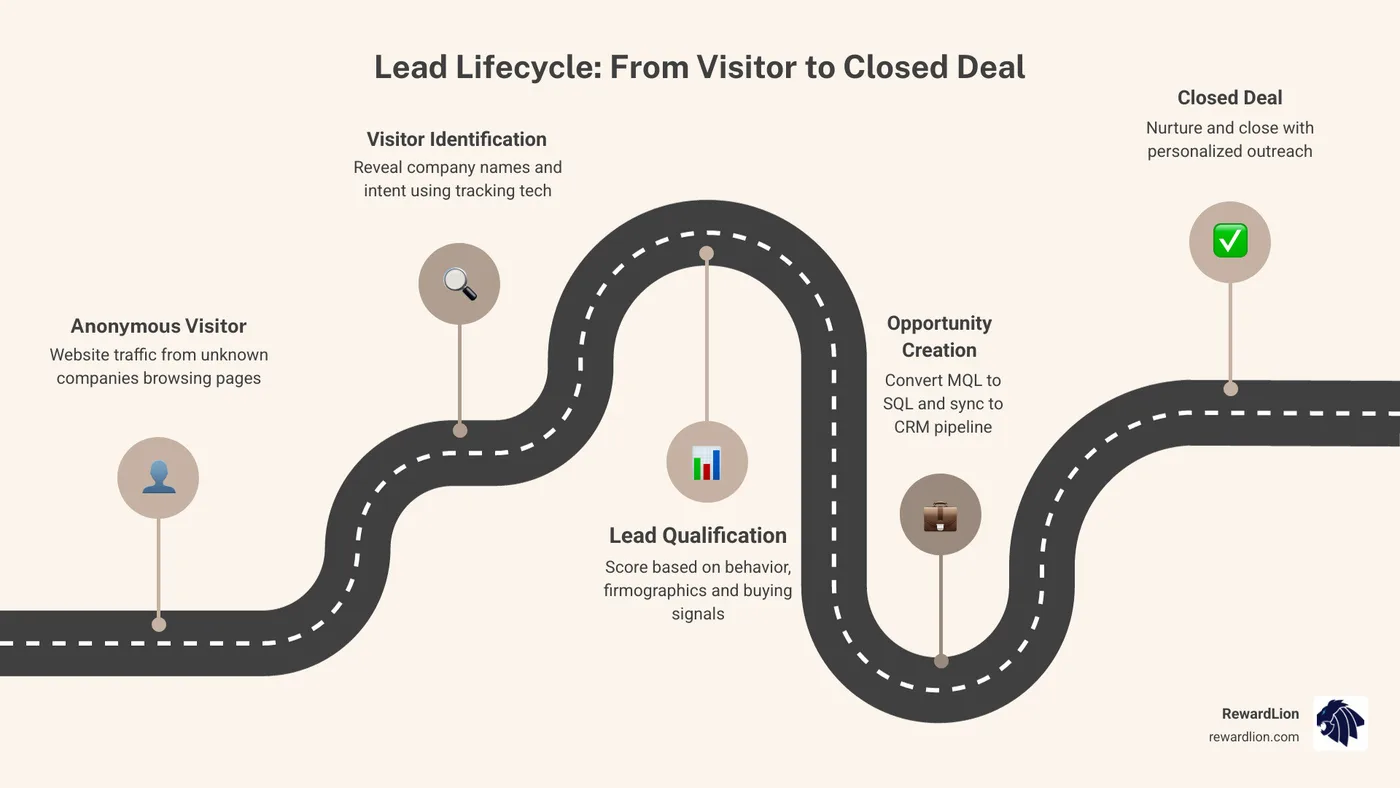
Lead generation is the process of attracting, identifying, and qualifying potential customers before they become buyers. In plain English: it is how we turn strangers into pipeline.
Modern lead generation software handles that process with automation. Instead of manually hunting through spreadsheets, copying contacts from social platforms, or guessing who is in-market, these tools help us:
find companies and contacts that fit our ideal customer profile
capture inbound interest from forms, chats, and website visits
enrich records with firmographic and contact data
score and route leads to sales
trigger outreach based on buying intent
That is why lead generation matters so much. Without a consistent flow of qualified leads, revenue becomes unpredictable. With the right system, businesses can shorten response times, improve conversion rates, and spend less per qualified opportunity.
In 2026, the biggest shift is that software no longer just stores leads. It actively helps us discover and prioritize them. That includes AI-based scoring, first-party intent from website behavior, third-party research signals, and real-time CRM sync.
If you want a broader foundation before choosing a tool, our guides on Lead Generation Software Complete Guide and Lead Gen Software break down the categories in more detail.

Lead Generation Platforms for B2B vs B2C
Not every platform is built for the same kind of buyer.
For B2B, the strongest platforms usually focus on:
firmographic data such as company size, revenue, industry, and location
job titles and org charts
technographic and buying intent signals
account-based targeting
CRM and sales engagement integrations
That is why database, enrichment, visitor identification, and outbound automation tools are usually strongest for B2B sales teams.
For B2C, the winning tools often lean more toward:
form capture
landing page conversion
chat and SMS response
email nurture
behavior-based automation
ecommerce or local lead flows
B2C often relies more on inbound because cold outreach can feel pushy fast. B2B, on the other hand, still depends heavily on outbound because decision-makers may not come to us first.
There is also a middle ground: hybrid systems that combine inbound capture with outbound follow-up. That is often the sweet spot for service businesses, local businesses in Florida and across the U.S., and growth teams that do not want separate stacks for every channel. If lead capture is your current bottleneck, our Lead Capture Software guide is a useful next read.
Top Lead Generation Platforms Ranked for 2026
Here is our practical ranking by platform category, based on fit, functionality, pricing approach, and 2026 relevance.
1. Website Visitor Identification Platforms
Best for: website visitor identification and inbound intent
This category stands out because it identifies companies visiting your website, even when no form is filled out. That matters because most B2B traffic leaves anonymous. Research shows this type of software can help teams identify a meaningful share of company traffic, prioritize high-intent visits, and improve conversion rates by giving sales teams context before outreach.
Key features:
anonymous website visitor identification
account and page-level visit tracking
intent signals based on on-site behavior
CRM sync with systems like Salesforce and HubSpot
alerts for high-fit account visits
Best use case: Teams with existing website traffic that want to convert hidden demand into sales conversations.
Pricing: Free trial often available, depending on vendor.
Main trade-off: It is strongest as an inbound-intent tool, not a full outbound prospecting suite.
2. All-in-One Outbound Platforms
Best for: B2B prospecting, outbound, and automation
This category is one of the most balanced options in 2026 because it combines database access, sequencing, enrichment, and workflow automation. These tools are designed to reduce stack sprawl and help sales teams prospect, enrich, and launch outreach from one place.
Key features:
B2B contact and company database
outbound sequencing
inbound form enrichment
CRM enrichment and cleansing
AI task prioritization and workflow automation
Best use case: Growing B2B teams that want one platform instead of stitching together five.
Pricing: Often includes a free plan or trial, depending on the provider.
Main trade-off: As with most all-in-one tools, depth in each module may not always match a specialist tool.
3. Enterprise Data and Intent Platforms
Best for: enterprise B2B data, intent, and account targeting
This category remains important for enterprise teams. Large-scale data coverage, segmentation, and buyer intent can be valuable when targeting complexity and account prioritization matter more than lightweight affordability.
Key features:
large B2B database
buyer intent data
account and contact enrichment
advanced segmentation
enterprise workflow integrations
Best use case: Mid-market and enterprise sales teams with larger budgets and strict targeting requirements.
Pricing: Often custom pricing.
Main trade-off: It is rarely the cheapest option, and smaller businesses may not need enterprise-grade complexity.
4. Contact Enrichment Platforms
Best for: verified contacts and easy prospecting workflows
This category is a strong choice for teams that want simplicity plus solid verified data. It is especially useful for reps who prospect directly from professional networks and want quick CRM sync.
Key features:
verified direct dials and emails
buying signals
browser extension
CRM sync and list building
basic automation
Best use case: SMBs and SDR teams that need easy contact discovery without enterprise overhead.
Pricing: Free plan often available.
Main trade-off: Less robust for full-funnel inbound use cases.
5. Social Selling Platforms
Best for: social selling and stakeholder discovery
This category is still one of the most practical approaches for finding decision-makers, mapping buying committees, and monitoring account activity. It is especially helpful when outbound starts with relationship-based selling rather than cold database pulls.
Key features:
advanced people and account search
account lists and alerts
org chart visibility
warm-context prospecting via professional networks
Best use case: Reps and founders selling into complex B2B accounts where who you target matters as much as what you say.
Pricing: Roughly $99/month for entry-level access is common in this category.
Main trade-off: It is not a complete lead gen system by itself. Most teams pair it with CRM, enrichment, or sequencing tools.
6. AI Prospecting Platforms
Best for: AI-powered prospecting at scale
This category focuses on using AI to support prospecting, data refresh, and outreach workflows. It is useful for high-volume teams that care about automation and data freshness.
Key features:
AI-assisted prospecting
buyer intent and job change signals
CRM enrichment
outreach support across email and calling
large integration ecosystem
Best use case: High-volume B2B prospecting teams that care about automation and data freshness.
Pricing: Free plan may be available, with fuller pricing often shared during sales conversations.
Main trade-off: Pricing clarity can be limited until evaluation begins.
7. CRM-Connected Prospecting Platforms
Best for: champion tracking, browser-based lead capture, and CRM sync
This category is especially useful for outbound reps who live in professional networks and need clean transfer into Salesforce or HubSpot. A key differentiator in this space is champion tracking: following contacts who change jobs so warm relationships do not disappear.
Key features:
browser extension for lead capture
Salesforce and HubSpot sync
AI personalization support
CRM enrichment
champion tracking
Best use case: Outbound teams where relationship continuity and fast prospect capture matter.
Pricing: Free plan often available.
Main trade-off: It is more specialized for prospecting than broad inbound lead capture.
8. Custom Data Providers
Best for: custom, high-precision B2B datasets
This category takes a more tailored approach with AI plus human review. That is useful when off-the-shelf databases do not cover your niche, region, or buying committee depth well enough.
Key features:
custom data sourcing
human-verified enrichment
buying committee visibility
contact-level insights
international compliance support
Best use case: Teams with complex ICPs, hard-to-find accounts, or global data quality needs.
Pricing: Custom pricing.
Main trade-off: Best suited to strategic data projects, not always the fastest plug-and-play option.
Key Features and AI Trends for 2026
The 2026 market is being shaped by AI, but not in the cheesy "robot replaces sales team" way. The real value is efficiency.
The most important trends we are seeing in lead generation platforms are:
intent data
predictive analytics
AI copilots and assistants
real-time enrichment
first-party behavioral scoring
workflow orchestration across CRM, email, and ads
Intent data is especially important. Some platforms track first-party intent, like which companies visit your pricing page. Others add third-party intent, like research behavior across publisher networks. Together, these signals help us time outreach better instead of blasting cold lists and hoping for magic.
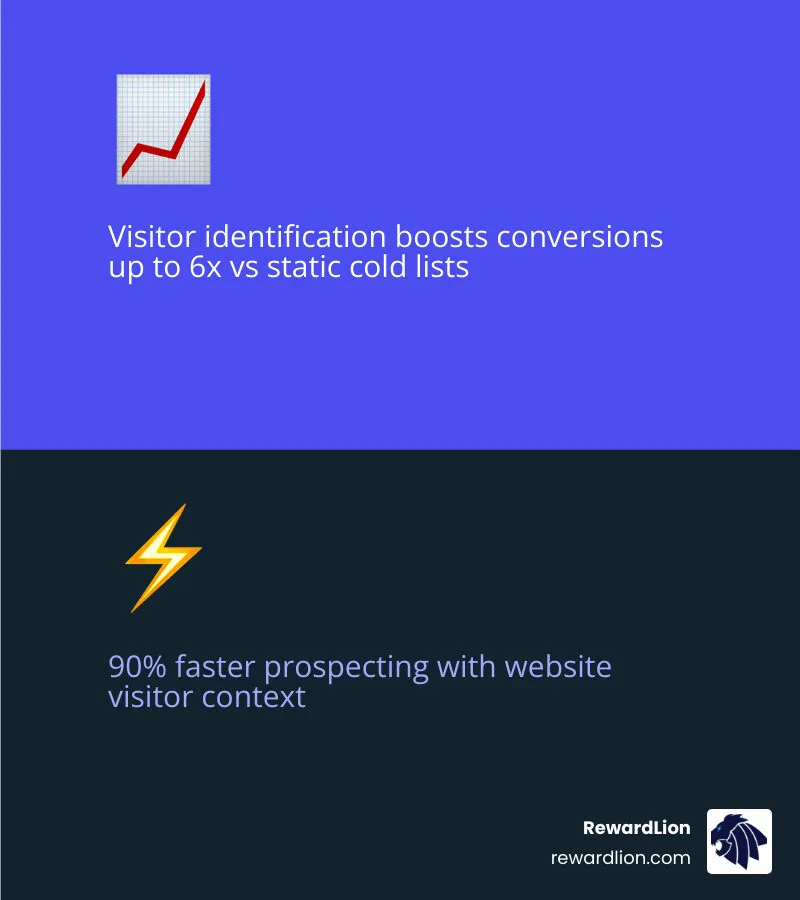
Research also shows that platforms with visitor identification can dramatically improve performance. Leadfeeder data points to up to 6x better conversions versus static cold lists and 90% faster prospecting when sales teams get website context first.
Our related resources on AI-Driven Sales Platform and Sales Automation AI Tools go deeper on how AI is changing execution.
Maximizing ROI with Lead Generation Platforms
The best software does not just generate more leads. It generates better leads, faster.
To measure ROI, we recommend tracking:
cost per lead
cost per qualified lead
MQL-to-SQL conversion rate
meeting booking rate
pipeline generated
win rate by source
speed-to-lead
sales hours saved
This matters because the cheapest tool is not always the most affordable. A low monthly subscription can become expensive if data quality is poor, integrations break, or reps waste hours cleaning records.
Research repeatedly points to the same outcome: better timing and better data improve conversions. Website intent, job changes, buying signals, and accurate direct dials all help teams focus on accounts already moving toward a decision.
For a deeper measurement framework, see our Lead Generation Analytics guide.
How to Evaluate and Choose Software
If you are comparing tools, start with strategy first and software second.
Ask these questions:
Are we mainly inbound, outbound, or hybrid?
Do we need contact data, visitor identification, outreach automation, or all three?
Which CRM do we need to sync with?
How important is compliance for our geography and customer base?
What is the true total cost, including onboarding, add-ons, and extra seats?
CRM integration is non-negotiable. Good lead generation software should connect cleanly with systems like Salesforce, HubSpot, or Zendesk so we are not creating a second source of truth. Strong platforms typically offer direct sync, field mapping, activity logging, and enrichment workflows.
Data quality should also be near the top of the checklist. Big databases sound impressive, but coverage of your ideal customer profile matters more than raw record count. We would rather have 5,000 accurate prospects than 500,000 mystery contacts and a support ticket headache.
Compliance matters too. For U.S. and international operations, look for clear commitments around GDPR, CCPA, and security standards such as SOC 2 or ISO 27001 where relevant.
Here is a simple pricing model comparison:
Pricing model How it works Best for Watch-outs Per-seat Flat fee per user each month teams with stable rep counts cost rises fast as team grows Credit-based Pay by usage, exports, or enrichments flexible prospecting volume credits can disappear fast Free plan + upgrades basic access with paid limits testing and small teams useful features may be gated Enterprise custom tailored quote based on scope large orgs with complex needs less transparent pricing Hybrid SaaS + service platform plus managed execution teams wanting hands-off growth requires evaluating service scope
If you are also comparing software against agencies or outsourced support, directories like Best Lead Generation Companies in United States 2026 and Top 50 lead generation companies worldwide | Outsource Accelerator can help frame the market.
This is also where we believe the hybrid model matters. Pure tools are great if you have the team, time, and process to run them well. But many companies do not want another dashboard to babysit. At RewardLion, we built around that gap: one connected AI operating system, plus an expert team that implements and manages it. If that approach sounds closer to what you actually need, our content on Demand Generation Software, Small Business Automation Software, and AI Automation for Agencies may help.
Frequently Asked Questions about Lead Generation Platforms
What is the difference between inbound and outbound lead generation tools?
Inbound tools help capture people who show interest first. Think forms, landing pages, chat, website visitor identification, webinars, or callback widgets.
Outbound tools help us find and contact prospects who may not know us yet. Think contact databases, social prospecting, email sequencing, dialers, and enrichment.
In short:
inbound captures existing demand
outbound creates demand
hybrid systems do both
Most B2B teams need both. Most B2C teams lean heavier on inbound.
How does website visitor identification technology reveal anonymous traffic?
These tools use IP-to-company matching and related data techniques to identify which business organizations are visiting a site, even when an individual visitor does not fill out a form.
That lets us see:
company names
pages viewed
visit frequency
time on site
return visits
likely buying intent
The big advantage is timing. If a high-fit account visits your pricing, product, or case study pages, sales can respond while interest is fresh. Research around this category suggests it can identify a meaningful share of visiting companies and improve conversions compared with static cold lists.
It does not turn every visitor into a named person, but it does turn anonymous traffic into actionable account intelligence. In B2B, that is often enough to open the right conversation.
Which pricing models are most common for lead generation software in 2026?
The three most common models are:
per-seat subscriptions
credit-based usage
enterprise custom contracts
Many platforms also offer free plans or free trials.
The right model depends on how your team works:
per-seat is easier for budgeting
credit-based can be cheaper for light use
enterprise pricing fits large teams with custom workflows
hybrid managed models fit companies that want outcomes more than logins
Always calculate total cost of ownership, not just sticker price. Add onboarding, training, enrichment fees, extra seats, and the cost of internal time. Software is cheaper on paper than in practice if nobody actually uses it.
Conclusion
The best lead generation platforms in 2026 are not just bigger databases or shinier dashboards. They help us find the right buyers, act on real intent, sync with CRM, and move faster from lead to revenue.
If you want a specialist tool, the list above gives you strong options by use case. If you want a fully connected growth system without managing a pile of disconnected apps, we built RewardLion for exactly that.
Our model combines Hybrid SaaS, AI automation, CRM workflows, lead capture, analytics, and done-for-you execution inside one operating system. That means less tool sprawl, fewer leaks in the funnel, and more time spent actually growing.
If you are ready to see how that works, visit https://rewardlion.com/platform/.