At its core, lead capture software is the digital handshake between your business and a potential customer. It is the technology that facilitates the exchange of value—such as an eBook, a newsletter subscription, a webinar seat, or a trade show demo—for a prospect’s contact information. Without this technology, your marketing efforts are essentially a bucket with a hole in the bottom; you are pouring in traffic, but failing to retain the value.
The process typically follows a specific, high-performance workflow designed to minimize friction:
The Trigger: A visitor lands on your site via SEO, paid ads, or social media, or they physically walk into your event booth. This is the moment of peak interest.
The Interaction: They encounter a strategic touchpoint. This could be a multi-step form that feels like a quiz, an exit-intent popup that offers a last-minute discount, or a QR code on a physical banner.
The Data Collection: The user provides their details. Modern systems prioritize "progressive profiling," asking for basic info (name, email) first, and deeper info (company size, budget) only after trust is established.
The Synchronization: The software instantly pushes this data into a CRM (Customer Relationship Management) system, ensuring no manual data entry is required.
The Automation: An automated workflow triggers an immediate "thank you" email, sends a SMS confirmation, or notifies a sales rep to call the lead while the brand is still top-of-mind.
One common point of confusion we see is the difference between lead capture and lead retrieval. While they sound similar, they serve different masters. Lead retrieval is specific to events; it involves scanning a pre-registered attendee's badge to pull the data already stored by the event organizer. Lead capture software, however, is more versatile. It allows you to collect new information, add qualifying notes, and work across both digital and physical channels, giving you full ownership of the data from the start.
The science behind this is compelling. Research shows that qualified leads convert at a staggering 40%, while unqualified prospects hover around 11%. Furthermore, product-qualified leads (those who have interacted with a demo or trial) convert at 2-3x the rate of traditional marketing leads. By using software to gate these experiences, you aren't just getting a name; you're getting intent and a clear roadmap for the sales conversation.
Essential Features of High-Converting Lead Capture Software
Not all tools are created equal. To ensure you aren't just collecting "digital trash" (emails like test@test.com), your lead capture software needs to be intelligent. Here are the non-negotiable features we look for when building growth engines for our clients:
Multi-Step Forms: Asking for ten pieces of information at once scares people away. Multi-step forms break the process into bite-sized questions. By using psychological principles like the "sunk cost fallacy," these forms can improve completion rates by 20-30% because users are more likely to finish a process they have already started.
AI Enrichment: Modern tools don't just stop at an email address. They use AI to "sniff" the web and pull in the lead's LinkedIn profile, company revenue, and job title automatically. This allows your sales team to have a personalized conversation without the lead having to fill out a 20-field form.
Lead Scoring: This feature assigns a numerical value to a lead based on their actions. Did they visit the pricing page? +10 points. Did they watch a full demo? +20 points. This ensures your sales team focuses on "hot" prospects rather than wasting time on "window shoppers."
Real-Time Verification: High-quality tools check if an email is valid or if a phone number is reachable the moment it is typed. This prevents your CRM from being cluttered with "bad" data and protects your email sender reputation.
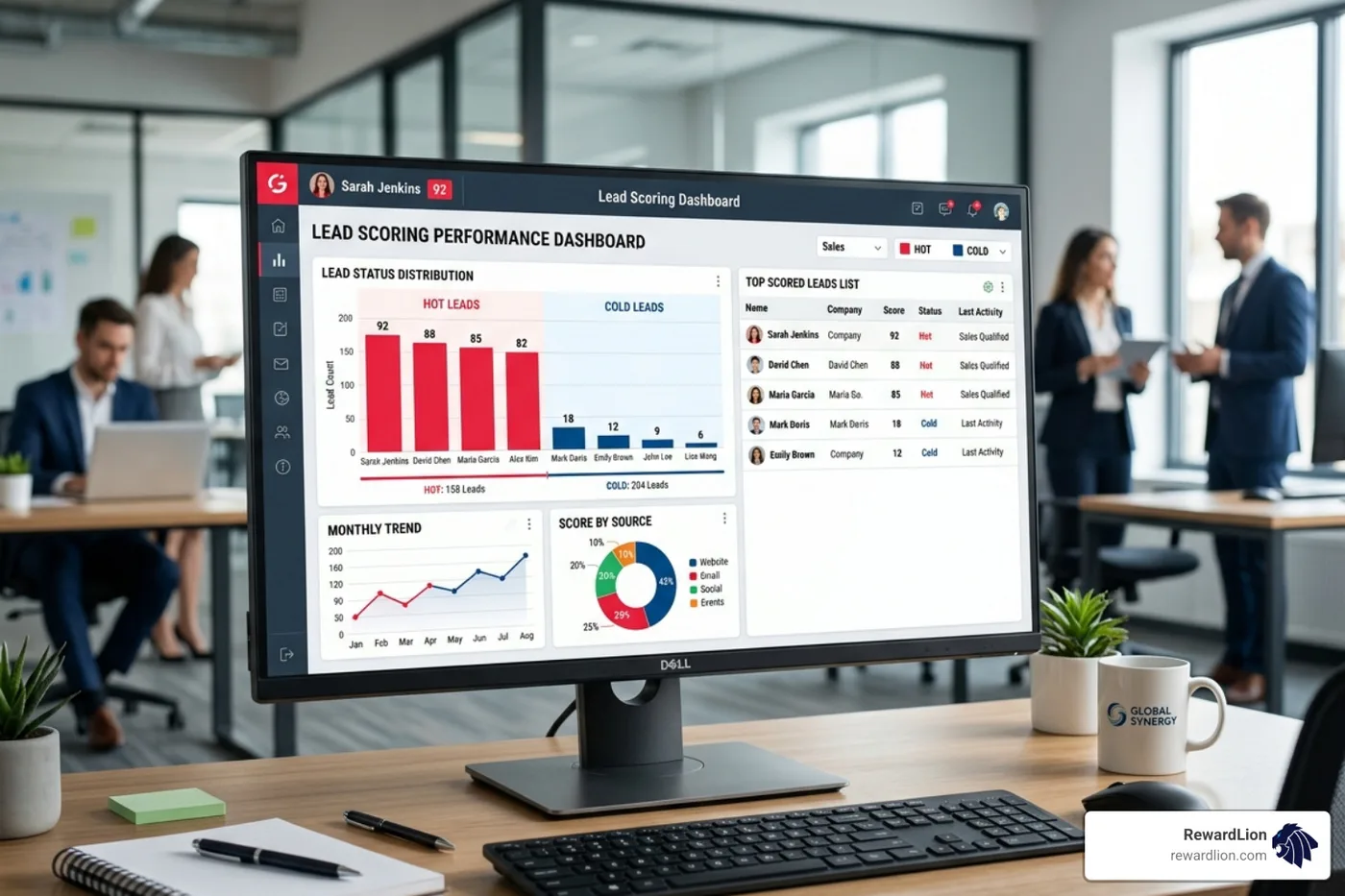
If you are looking to build a predictable, scalable flow of prospects, it is often best to look at comprehensive lead generation systems that combine these features into a single, managed OS. For a broader overview of how digital contact collection works across websites and campaigns, the concept is closely related to web forms, which remain one of the core mechanisms behind modern lead capture.
Choosing the Right Lead Capture Software for Your Team
When we consult with businesses in Miami or Fort Lauderdale, we find that the "best" tool usually depends on the environment. For small teams, ease of use and a low learning curve are paramount. You don't want a tool that requires a full-time developer to change a button color. For enterprise teams, the "integration ecosystem" is the deal-breaker. If the software doesn't have a pre-built integration with your existing CRM, it will create more manual work than it saves.
Offline capabilities are another critical factor. If you have ever been to a trade show at a major convention center, you know the Wi-Fi is notoriously unreliable. You need software that can capture data locally on a tablet or phone and sync it to the cloud once you are back on a stable connection. This prevents the nightmare scenario of losing a day's worth of hard-earned leads due to a technical glitch.
How Lead Capture Software Improves Sales Follow-Up Speed
Speed is the ultimate competitive advantage. According to research published by the Harvard Business Review, the "golden window" for conversion is actually within the first five minutes of a lead being submitted. Despite this, the average B2B response window remains nearly 47 hours.
Lead capture software eliminates the "CSV shuffle"-that painful process where a marketing manager downloads a list of leads, cleans the spreadsheet, and then emails it to the sales team three days later. With automated routing, a lead can be captured on your website and land on a sales rep's phone as a push notification in under 21 milliseconds. When companies switch to intelligent capture tools, they often report following up with leads 7x faster. That isn't just an efficiency gain; it's a direct boost to the bottom line because you are reaching the customer while their problem is still urgent.
Top Lead Capture Solutions for Websites and Events
To help you navigate the crowded market of 2026, we've categorized the top-performing tools based on where you plan to use them. The goal is to match the tool to the specific intent of the user at that moment.
Tool Type Best For Key Feature Website Forms Inbound Traffic Multi-step logic & A/B testing Interactive Demos SaaS & Tech Gated product tours Event Apps Trade Shows Universal badge scanning & Offline mode Popups/Overlays E-commerce Exit-intent triggers Digital Business Cards Networking Instant contact exchange & CRM sync
Interactive Demos are the rising stars of 2026. Instead of asking someone to "Book a Demo" (which feels like a commitment to a 30-minute sales pitch), you let them play with a guided version of your software. Once they reach a "wow" moment—like seeing a specific report or completing a task—you trigger a lead capture form. This captures high-intent prospects who have already seen the value of your product and are much more likely to convert.
Gamification is another powerhouse for event-based capture. By running digital scavenger hunts or leaderboards at your booth, you turn a boring data-entry task into an engaging experience. Offering rewards, such as digital gift cards or exclusive industry reports, can increase lead volume significantly. However, you must use lead scoring to filter for quality afterward to ensure your sales team isn't chasing people who only wanted a free prize.
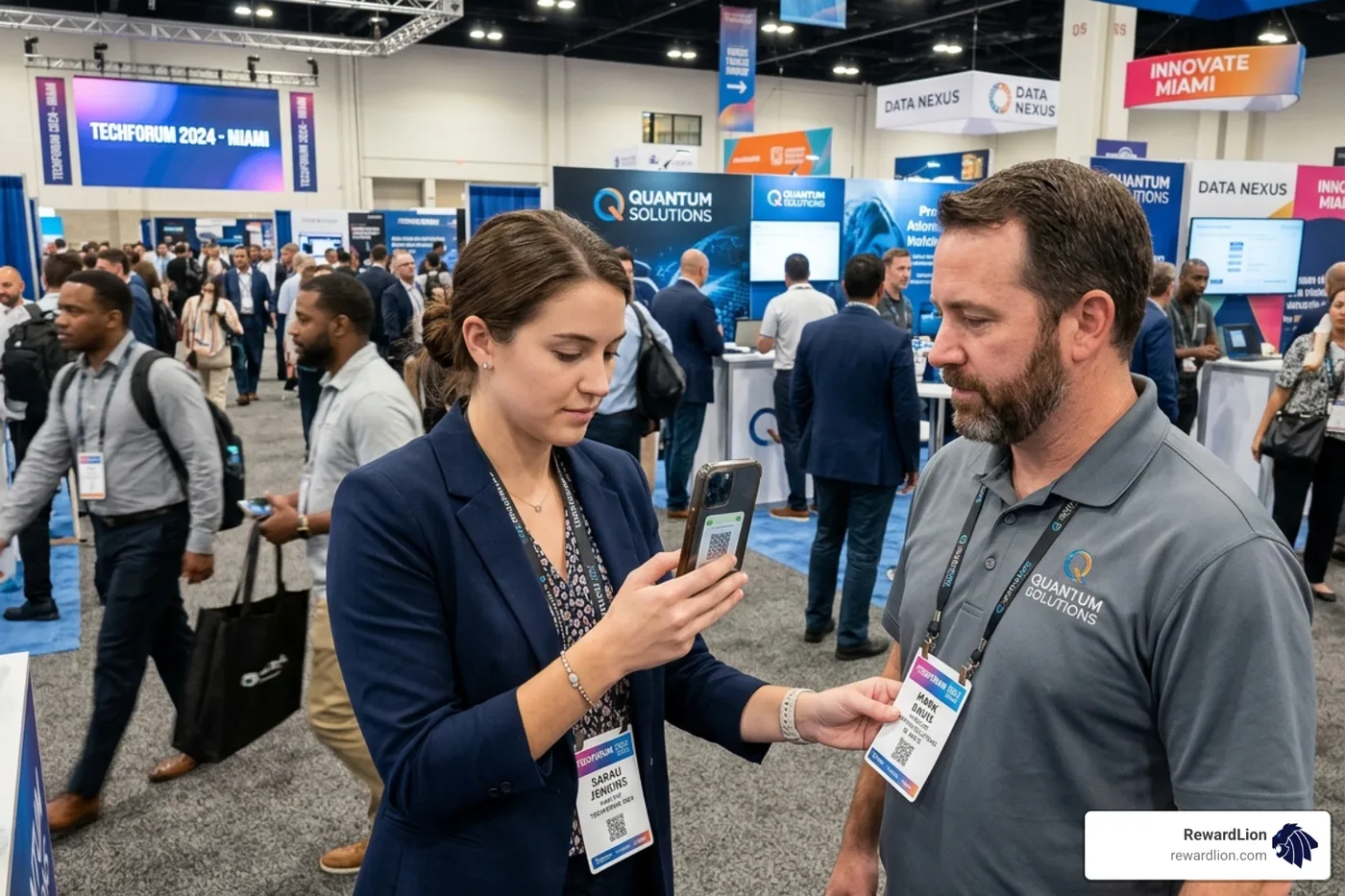
For those looking for affordability and efficiency at events, using your own smartphone camera to scan badges is the modern standard. It is significantly more cost-effective than renting clunky hardware scanners from event organizers, which can cost hundreds of dollars per event. Modern software allows for universal scanning, meaning it can read almost any QR code or barcode format used by different event providers.
Frequently Asked Questions about Lead Capture
What is the difference between lead capture and lead retrieval?
Lead retrieval is the process of accessing data that an event organizer already has (scanning a badge). Lead capture is the broader process of collecting any prospect data across any channel (web, social, or event) and qualifying that data with custom questions or AI enrichment. Lead capture gives you more control over the specific data points you want to collect, such as "What is your primary pain point?" or "When do you plan to make a purchase?"
Can lead capture tools work without WiFi at events?
Yes! Professional-grade event apps are designed for "offline-first" environments. They store the encrypted data locally on your device and automatically sync it to your CRM the moment you reconnect to a network. This ensures you never lose a lead due to the spotty connection often found in large convention centers or outdoor festivals.
How much does lead capture software typically cost?
The market is very flexible, allowing businesses of all sizes to find a solution that fits their budget:
Free Options: Many entry-level CRM platforms offer basic forms and simple CRM sync to get you started, though these often lack advanced features like AI enrichment or custom branding.
Mid-Range: Tools focusing on website conversion or event scanning typically range from $20 to $100 per month. These usually include A/B testing and more robust integration options.
Enterprise/AI-Powered: Advanced systems that include AI funnel building, cryptographic compliance proofing (for GDPR/CCPA), and deep data enrichment can start at $199/month and scale based on lead volume and the number of users.
Conclusion
In the modern business landscape, traffic is expensive, but attention is even pricier. If you are spending money to get people to look at your brand, you cannot afford to let them leave without a trace. Whether you are using lead capture software for a local business in Boca Raton or an international SaaS company, the goal remains the same: turn interest into an organized, actionable pipeline that fuels your sales team.
At RewardLion, we believe you shouldn't have to manage a dozen disconnected tools just to grow your business. Our AI-powered OS unifies your marketing, sales, and lead capture into one seamless system. We don't just give you the software; our dedicated CAPSS team implements, optimizes, and manages it for you. This "Hybrid SaaS" model means you get the power of cutting-edge technology with the expertise of a fractional marketing agency.
From high-converting landing pages to automated nurture sequences, we provide a "done-for-you" growth engine that ensures no lead is ever left behind. We handle the technical heavy lifting—from API integrations to lead scoring logic—so you can focus on closing deals and running your business. Ready to see how a unified system can transform your ROI? Explore our AI-powered platform today and let's start capturing the growth your business deserves.