Defining the Modern AI Automation Agency
The landscape of business technology is shifting beneath our feet. While traditional automation relied on rigid "if-this-then-that" rules, the modern ai automation for agencies model is built on adaptability. We are no longer just connecting App A to App B; we are building digital ecosystems that think, learn, and evolve.
What is an AI automation agency and how does it differ?
A traditional automation service might set up a simple trigger to send an email when a form is filled out. An AI automation agency, however, builds custom pipelines that handle context. Instead of just sending an email, an AI agent can read the form, determine the sentiment of the user, check your current inventory or calendar, and draft a personalized response that sounds like a human wrote it.
The core difference lies in adaptive intelligence. Traditional systems break when the input changes slightly. AI-driven systems use machine learning and natural language processing (NLP) to handle "fuzzy" data. They don't just follow a script; they understand the goal. This allows for advanced AI solutions that offer provider-agnostic flexibility, meaning we can pick the best AI model for the specific task at hand, whether it is image recognition or complex data analysis. If you want a simple technical definition of automation in business systems, workflow automation is a useful reference point before layering in AI capabilities.
The shift toward AI automation for agencies in 2026
As we look toward 2026, the market is moving away from "AI wrappers" and toward deep operational integration. McKinsey predicts that by 2055, half of all work on Earth could be automated. We are already seeing the rise of self-learning agents that achieve 98% accuracy - accuracy that actually improves with every single run.
The leading AI automation agencies in 2026 are those focusing on "white-glove" setups. These agencies don't just hand you a login; they transform your 200-page SOP (Standard Operating Procedure) into a working digital agent in a matter of weeks. This shift allows businesses to scale without a linear increase in headcount, effectively decoupling revenue growth from payroll costs.
Why Most AI Automation for Agencies Fails Small Businesses
Despite the hype, many small business owners—especially those in retail with around $200k in annual revenue—feel burned by AI. The "shiny object syndrome" has led many agencies to overpromise and underdeliver, leaving owners with expensive tools they don't know how to use.

Avoiding the "Automation of Chaos" in AI automation for agencies
The biggest mistake we see is trying to automate a broken process. If your current manual workflow for tracking inventory is a mess of sticky notes and unread emails, putting AI on top of it will only create "automated chaos." AI is an accelerator; it makes a good process faster, but it makes a bad process fail faster.
Before we implement any AI consulting in Fort Lauderdale or for South Florida SMBs, we focus on process mapping. This means digitizing your SOPs and defining exactly how money moves through your business. Only once the workflow is defined can we introduce automation. This is a core part of our marketing services at RewardLion—ensuring the foundation is solid before we build the AI skyscraper.
Why small budgets lead to failed AI projects
There is a common "trap" where businesses expect a custom AI overhaul for under $2,000. In the real world, this budget barely covers the discovery phase. High-quality ai automation for agencies requires deep scoping to avoid "knowledge leaks"—where an agency builds a tool, leaves, and takes the understanding of how it works with them.
Advanced scoping tools help agencies avoid the "scoping error" by using AI to infer project context from documents and meetings. Without proper scoping, projects face "non-deterministic" behavior—meaning the AI might act randomly 1% of the time, which can be disastrous for tasks like filling out loan applications or legal forms.
High-Impact Use Cases: From Retail to Operations
For a retail owner or a small service business, AI shouldn't be a mystery. It should be a tool that solves the "annoying" stuff. We focus on practical pain points that eat up your Saturday afternoons.
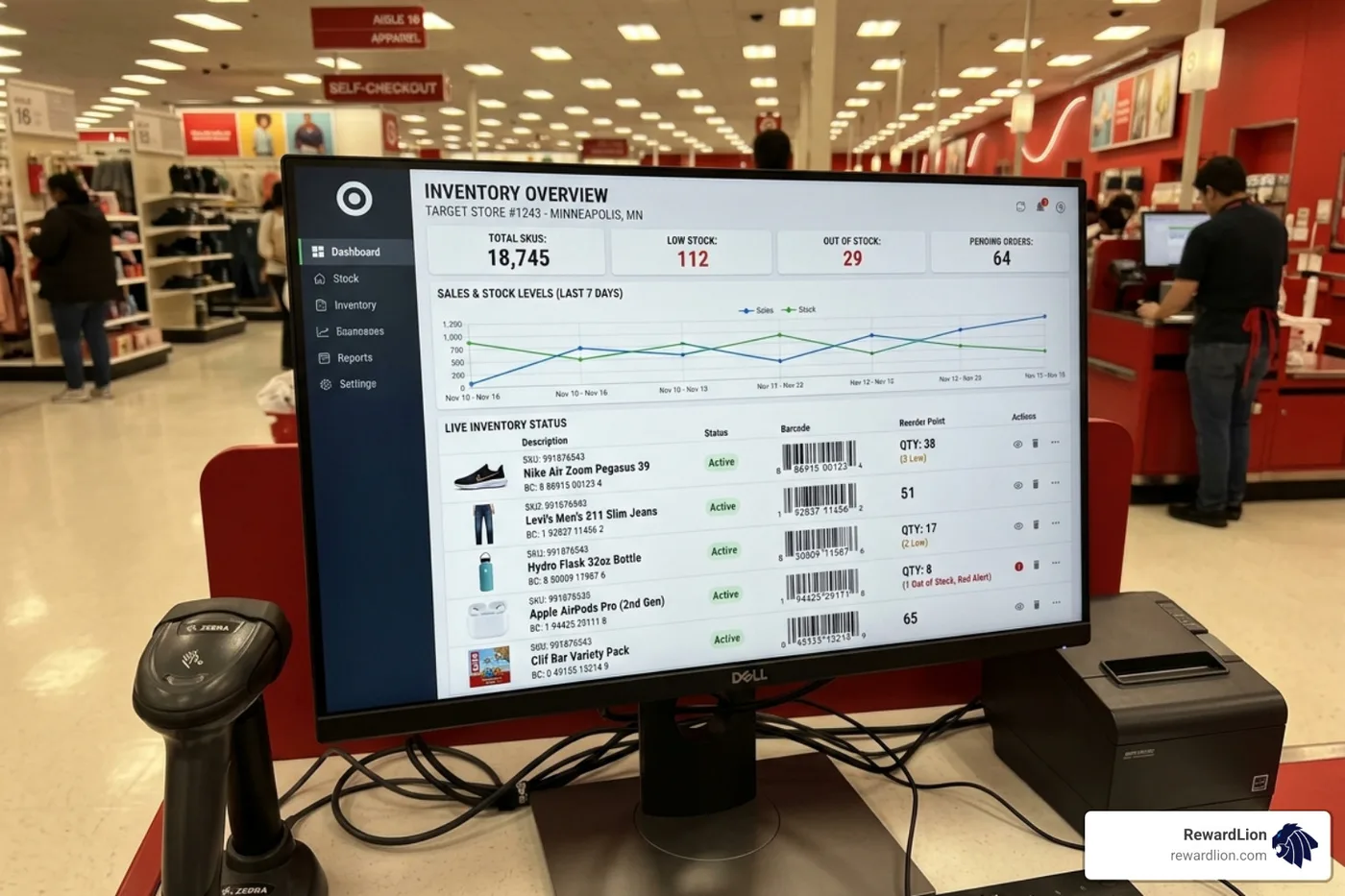
Solving practical pain points with AI automation for agencies
Think about the tasks you hate. Multi-form filling is a classic example. If you’re a high-ticket retail seller, you might have to fill out five different financing applications for one customer. An AI bot can take one set of data and populate all five forms instantly, reducing weeks of manual labor to seconds.
Other high-impact areas include:
Order Fulfillment: Automatically updating customers and tracking shipments across multiple platforms.
24/7 Response: AI receptionists that handle phone calls and bookings at a fraction of the cost of a full-time staffer.
Sentiment Analysis: Scanning customer reviews across the web to detect a PR crisis before it escalates.
For businesses in South Florida, looking at localized AI automation insights in Miami or Boca Raton can provide a better understanding of how these tools are being deployed in our specific market.
Real-world ROI in the SMB sector
The numbers don't lie. When we implement software services correctly, the ROI is measurable and immediate. A 2025 study showed that combining generative AI with intelligent document processing slashed processing time for expense workflows by 80%.
Task Manual Time AI Automated Time Improvement Inventory Data Entry 5 Hours/Week 10 Minutes/Week 96% Faster Lead Qualification 15 Mins/Lead 2 Seconds/Lead Near Instant Weekly Reporting 6 Hours/Week 90 Minutes/Week 75% Reduction Customer Support (Tier 1) 12-24 Hour Wait < 1 Hour Response 90% Faster
Building a Sustainable Agency Model: Pricing and Team Structure
If you're looking to hire an agency, or if you're an aspiring founder, you need to understand that the "solo founder" model is often a recipe for disaster. Custom AI projects are more like ongoing consulting than one-off products.
Why a solo founder cannot scale AI automation
An AI project involves multifaceted roles: a prompt engineer, a workflow architect, a data security specialist, and a project manager. A solo founder quickly becomes overwhelmed by "technical debt" and maintenance burdens. APIs change, models are deprecated, and business processes evolve. If your "agency" is just one person, your automation might break the moment they go on vacation.
This is why we advocate for branding services that position an agency as a "niche master." By specializing in one vertical—like retail or logistics—an agency can build repeatable, high-leverage systems that don't require reinventing the wheel for every client.
Validating repetitive problems worth solving
How do we find the best problems to solve? We look for the "annoying" tasks. We encourage our partners to join local chambers of commerce or host seminars to hear directly from business owners. Modern investment trends show that capital is flowing into companies that solve these deep operational inefficiencies.
The most successful models today aren't just "done-for-you." They are "done-with-you." This involves a paid discovery phase where we audit your current workflows to ensure we are solving a problem that actually impacts your bottom line.
Frequently Asked Questions about AI Agency Integration
What tools are recommended for building retail-focused automations?
For retail, we often recommend a stack that includes Voiceflow for custom chatbots, n8n or Make for workflow orchestration, and Beam AI for self-learning agents that can handle complex SOPs. These tools allow for AI sales automation that connects your CRM, inventory, and customer communication into one seamless flow.
How should business owners prepare before hiring an agency?
Don't show up empty-handed. To get the best results from ai automation for agencies, you should:
Document your SOPs: Even a rough flowchart is better than nothing.
Identify Bottlenecks: Where does work "pile up" on your desk?
Clean Your Data: AI is only as good as the information you give it.
Set KPIs: Know exactly what "success" looks like (e.g., "I want to save 10 hours a week on invoicing").
How can agencies communicate value without technical jargon?
The best agencies don't talk about "neural networks" or "large language models." They talk about time, labor, and money.
Instead of "NLP-driven sentiment analysis," say "We'll tell you when a customer is unhappy before they post a bad review."
Instead of "RPA for multi-tenant workspaces," say "We'll make it so you never have to type the same customer info into two different systems again."
Conclusion: The RewardLion Advantage
At RewardLion, we believe that technology should serve people, not the other way around. Our hybrid model is designed specifically to bridge the gap between complex AI capabilities and the real-world needs of business owners in Fort Lauderdale, Miami, and across the globe.
We don't just give you a tool and leave you to figure it out. Our RewardLion platform is an all-in-one OS that unifies your marketing, sales, and automation. More importantly, every component is managed by your dedicated CAPSS team—your fractional in-house marketing agency.
Whether you need to dominate local search with our Local Growth Engine, build a predictable lead flow with our Lead Generation System, or close deals on autopilot with AI Sales Automation, we provide the expert-led execution you need to scale.
You don’t have to hire multiple agencies or manage disconnected tools. We install one fully connected growth system, powered by AI and executed by experts who understand your business.
Ready to scale without losing the human touch?