What AI Content Studios Are (And Why Brands Are Switching Fast)
AI content studios are companies and platforms that use artificial intelligence - combined with human oversight - to produce high-quality content faster and at lower cost than traditional agencies.
Here's a quick breakdown of what they are and what they do:
Feature What It Means for You What they are Hybrid teams or platforms using AI + human editors to create content What they produce Videos, blogs, social posts, ads, emails, landing pages, and more How fast they work As fast as 3-4 hours per piece - up to 3x faster than traditional agencies What they cost Typically 60% less than traditional agency pricing Who uses them Brands, in-house marketing teams, and agencies managing multiple clients Key advantage Scale content across formats and platforms without scaling headcount
If you're a small or mid-sized business trying to produce more content - without hiring a full creative team or paying agency rates - AI content studios offer a compelling alternative. They combine generative AI tools, multi-agent automation, and human editorial review to take a single idea and turn it into ready-to-publish assets across multiple channels.
The shift is already happening at scale. Content teams at major companies across retail, software, and enterprise marketing are using AI-powered platforms to manage their content workflows. Next-generation AI content tools are increasingly seen as a meaningful leap forward for content production.
But not every studio works the same way - and choosing the wrong one can cost you time, money, and brand consistency.
This guide breaks down exactly how AI content studios work, what to look for, and how to pick the right one for your business.
I'm Mike Ibrahim, Founder and CEO of RewardLion and Marketing Director for several companies, with over a decade of experience building and scaling content and marketing systems - including hands-on work with AI content studios and the automation workflows that power them. I'll walk you through everything you need to know to make a confident, informed decision.
What Are AI Content Studios?
At the simplest level, AI content studios are modern creative operations systems. They use AI to help plan, generate, edit, adapt, and sometimes publish content across channels, while humans stay in the loop for strategy, quality, and brand control.
That means they are not just "AI writing tools" wearing a fake mustache.
A real AI content studio usually combines:
Brand strategy and messaging inputs
Prompt frameworks and reusable workflows
Generative AI for text, image, audio, and video
Editors, designers, or strategists for review
Approval systems
Multi-channel distribution support
Performance feedback loops
Instead of treating each blog post, ad, or video like a separate project, the studio treats content like a system.
How ai content studios differ from traditional creative agencies
Traditional agencies often rely on long production timelines, many handoffs, and separate teams for strategy, copy, design, video, revisions, and publishing. That model can still produce excellent work, but it is often slower and more expensive.
AI content studios change the workflow in a few important ways:
They compress production time with AI-assisted drafting and asset generation
They reduce repetitive manual work
They turn one concept into many formats quickly
They make iteration easier before final approval
They can often scale output without adding the same level of headcount
Research-backed benchmarks in this space suggest AI-assisted studios can be about 3x faster than traditional agencies, with pricing around 60% lower in some service models. Turnaround can be as short as 3 to 4 hours for certain asset types.
That does not mean "push button, receive genius." It means the boring parts get automated, and humans can spend more time on creative direction, QA, and strategy.
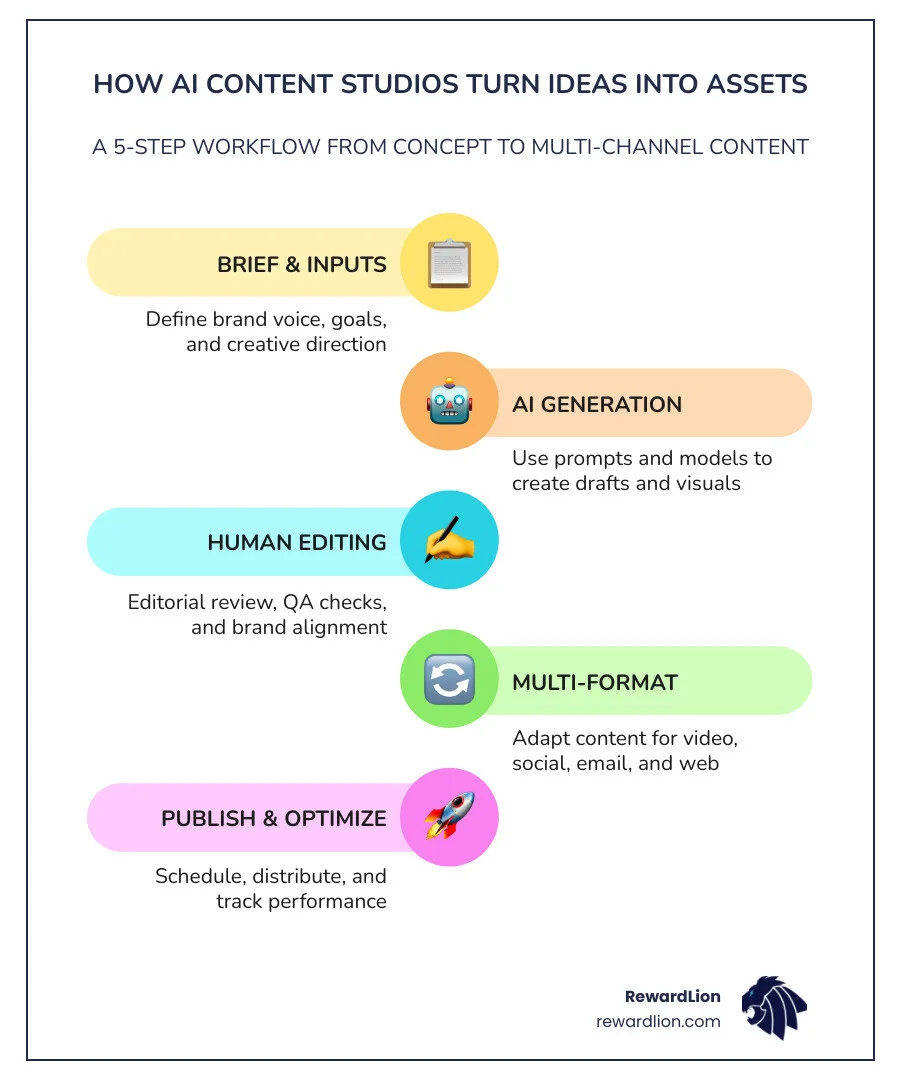
The core workflow inside ai content studios
Most AI content studios follow a version of this workflow:
Briefing
Goals, audience, offers, channels, tone, compliance needs
Brand input collection
Voice guidelines, product info, audience pain points, visual references
AI-assisted planning
Research, angles, outlines, scripts, storyboards, content calendars
Asset generation
Draft copy, visuals, motion concepts, variations by platform
Human editing
Fact-checking, tightening language, design refinement, compliance review
Approval gates
Internal or client review before publishing
Publishing and distribution
CMS, social scheduling, email deployment, ad launch
Measurement
Rankings, engagement, conversions, citations, leads
Services and Capabilities Brands Can Expect
The best AI content studios do much more than write blog posts. They usually support a mix of creative production and performance marketing content.
Common services include:
Video production
Storyboarding and scripting
Generative art and stills
Motion graphics
Blog posts and articles
Landing pages
Email sequences
Product copy
Social content
Ad creatives
Sales enablement assets
Multi-platform content repurposing
Video, design, and generative media services
Video is one of the biggest growth areas. AI video platforms now support script upload, visual concepting, text-to-image, image-to-video, video-to-video transformation, timeline editing, and even scene consistency tools.
One leading AI video production platform reports use by 135,000 producers, creative teams, and designers, plus a 4.4 rating on G2 with 295+ reviews. Its appeal is that teams can go from concept to storyboard to edited output inside one environment.
For brands, this unlocks:
Commercial concepts without full pre-production overhead
Short-form vertical video variants
Storyboards for stakeholder approval
Branded visual worlds with recurring characters, objects, or locations
AI-assisted VFX and mixed-reality creative
Faster testing of ad concepts before expensive shoots
Some AI-forward studios also blend live action with generative media, creating hybrid campaigns that mix filmed footage with AI visuals, stylized environments, and digital effects.
Multi-format content creation for modern channels
Modern marketing is not one asset. It is one idea, multiplied.
A single campaign concept can become:
A long-form article
A LinkedIn post
A short video script
Email copy
Display ad variations
Product page updates
Local landing pages
Sales follow-up sequences
That is where AI content studios shine. They can repackage the same core message for different formats without starting from scratch every time.
For brands trying to connect content to analytics and business outcomes, our guide on All-in-One Analytics is a useful next read.
How ai content studios support local, search, and authority content
Good studios do not stop at "looks nice."
They also help content perform in:
Traditional Google search
AI search experiences
Local search results
Map visibility
Reputation-driven decision journeys
Authority-building campaigns
In 2026, that matters more than ever. Content increasingly needs to rank on Google, appear in AI Overviews, and be discoverable in tools like ChatGPT and Perplexity. That is why GEO, or Generative Engine Optimization, is getting more attention.
For local businesses in South Florida and beyond, this overlaps with local search modernization too. You can see how AI-powered public services are entering local ecosystems in updates like Google Bringing AI-Powered Technology to Fort ... .
How AI Content Studios Use Automation to Streamline Production
The magic is not really magic. It is workflow design.
The strongest studios combine generative AI with automation layers that handle research, planning, formatting, versioning, and publishing.
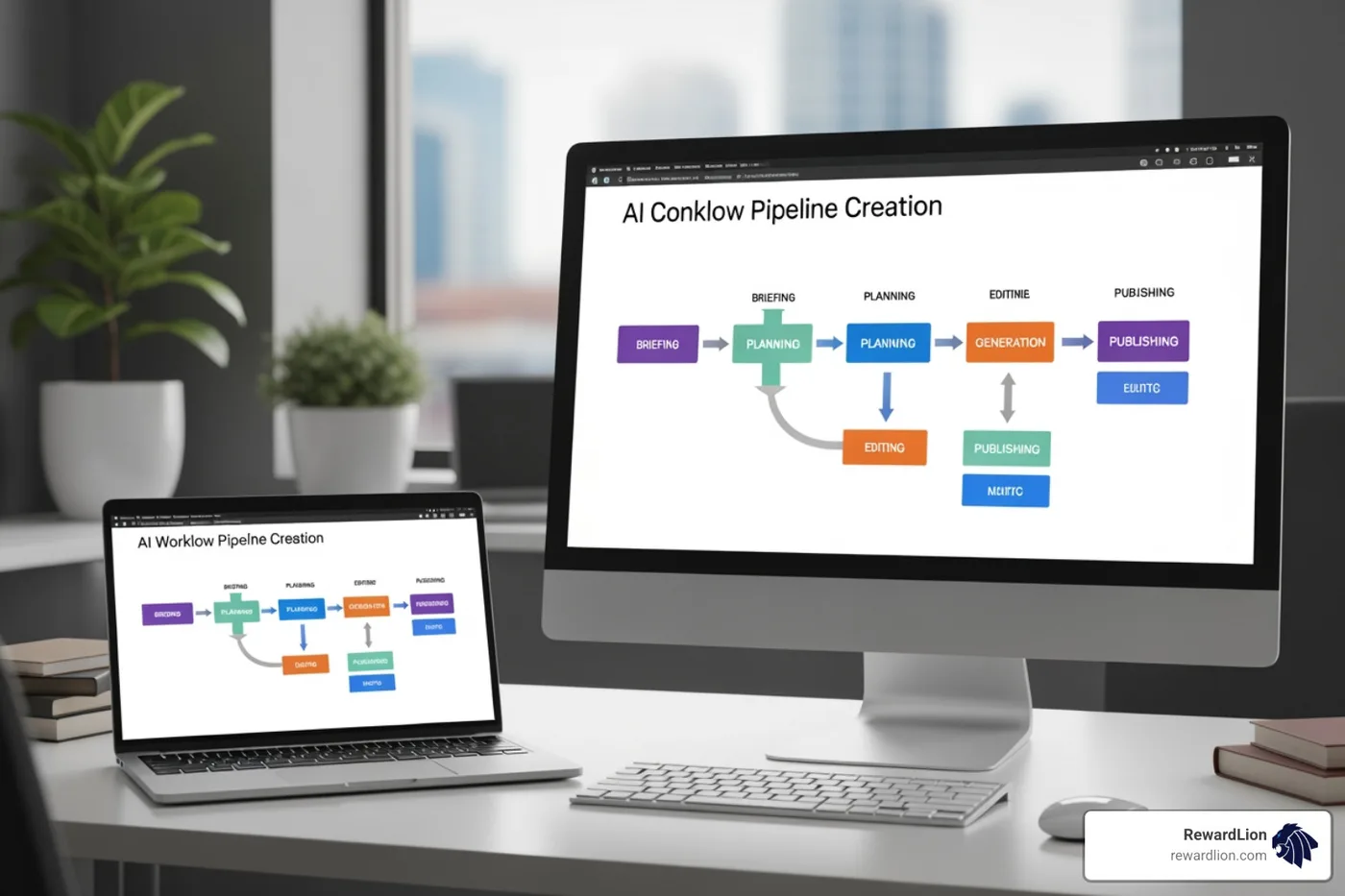
Using AI video platforms for scripting, storyboarding, and editing
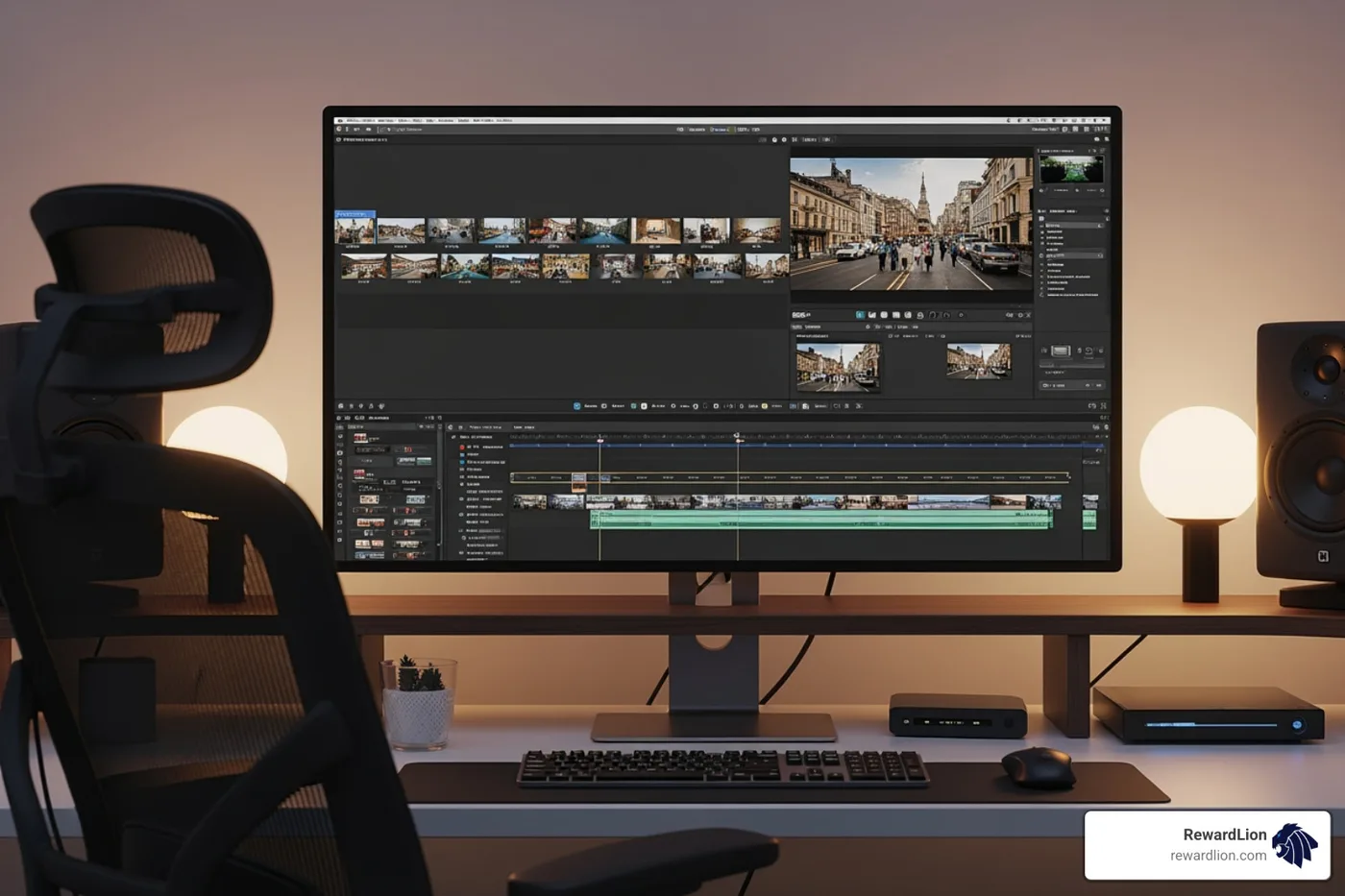
AI video production platforms now act like compact studios inside a browser.
Useful capabilities include:
Uploading a script and turning it into scenes
Generating dynamic storyboards
Building edits in a timeline view
Applying sound design
Using image or video references
Maintaining visual consistency across scenes
This matters because video used to require multiple disconnected tools and many rounds of explanation. With current systems, creative teams can show rough direction much earlier, then refine.
Research highlights one leading platform with:
135k users
4.4 G2 rating
Web-based access
Inputs from script, concept description, image, or video
Multi-agent systems for research, creation, and publishing
Another big shift is the rise of multi-agent content systems.
Instead of one AI model doing everything badly-ish, these systems assign specialized tasks to different agents. One researches. One formats for LinkedIn. One builds a script. Another creates platform variations. Another schedules publishing.
Research in this category points to systems with:
64 specialized agents
88+ format combinations
Support across 11 platforms
2,500+ agency users
4.9/5 average rating
Case examples showing 340% LinkedIn engagement growth in 90 days
The takeaway is not that every brand needs 64 agents marching in formation like a tiny robot orchestra. It is that specialized workflows usually outperform random prompting.
Why connected systems outperform one-off AI tools
One-off AI tools can create drafts. Connected systems create outcomes.
The difference is context.
A connected system stores and reuses:
Brand voice
Product details
Target personas
Visual guidelines
Approved claims
SEO targets
Internal linking logic
Publishing rules
That reduces handoffs and repeated briefing. It also makes collaboration easier between humans and AI.
If you want to see how this applies in real operations, our post on AI Automation for Agencies breaks down the advantages of connected workflows over disconnected tools.
Benefits of AI Content Studios for Brands
When implemented well, AI content studios create four core advantages: speed, lower production cost, consistent messaging, and scale.
Speed, cost efficiency, and scalable production
The speed advantage is often the first thing brands notice.
Research across AI-assisted service models shows:
Up to 3x faster production than traditional agencies
Around 60% lower cost in some cases
3 to 4 hour average turnaround for certain content types
That does not mean every project finishes before lunch. Complex campaigns still need planning and approvals. But AI dramatically shrinks the time spent on first drafts, concept variants, formatting, and repurposing.
This helps brands:
Launch campaigns faster
Test more creative angles
Maintain always-on publishing
Support more channels with the same team
Increase output without proportional headcount growth
Brand voice consistency, QA, and human review
One of the biggest beginner concerns is fair: "Will this sound like us, or like a caffeinated robot?"
The answer depends on the workflow.
Strong studios protect quality with:
Brand onboarding
Voice examples and style guides
Prompt templates grounded in brand rules
Human editorial review
Approval checkpoints
Compliance and factual accuracy checks
Visual consistency systems
Several researched platforms stress this heavily. Some store brand context in persistent memory so every asset pulls from the same voice and positioning. Others combine AI generation with human editorial review before anything goes live.
That hybrid model is usually the sweet spot.
Google also continues to focus on helpful, high-quality content, not whether the first draft was human or AI generated. Thin, inaccurate, or low-value content is the real risk.
Better visibility across Google and AI search
Another major benefit is discoverability.
Today, brands need content that can:
Rank in organic search
Win visibility in AI Overviews
Be cited by LLM-driven tools
Support conversion paths after discovery
This is where GEO and LLM optimization come in. Research shows platforms in this category are trusted by 30,000+ content teams and hold 4.8 ratings on G2 with 295+ reviews. Other enterprise-focused providers report up to 14X ROI tied to improved LLM visibility and optimized conversion journeys.
The strategic lesson is simple: content should not only be publishable. It should be findable.
Real-World Examples and How to Evaluate an AI Content Studio
The market is growing fast. One industry report notes that at least 65 different AI studios launched globally since 2022, which tells us two things:
Demand is real
Vetting matters
Campaign examples from ai content studios
Across the market, AI content studios are being used for:
Automotive creative concepts
Sportswear visuals
Beverage launches
Hybrid films
Generative stills
AI-enhanced VFX
Immersive branded content
These examples show that AI is not limited to blog writing. It is increasingly part of visual campaign development too, from ad concepting to stylized art direction.
For a lighter example of how generative visuals can become culturally engaging content, see AI Visualizes All 50 U.S. States as Hunger Games Contestants . It is not a brand case study, but it does show how AI-generated visuals can drive attention when the concept is strong.
What to ask before choosing a studio
Before hiring an AI content studio, we recommend asking:
How do you collect and store brand voice?
Who reviews the content before publication?
What parts are automated, and what parts are human-led?
How do you handle factual accuracy and compliance?
Can you create platform-specific variants?
How do you optimize for SEO, GEO, and local visibility?
What publishing systems do you support?
What analytics do you provide after launch?
How do revisions work?
Who owns the final assets and usage rights?
How do you protect brand safety and data?
You should also ask whether the studio can connect content to your wider marketing stack. Content without CRM alignment, reporting, or lead workflows is basically a sports car with no steering wheel.
Comparing ai content studios and traditional agencies
Criteria AI Content Studios Traditional Agencies Turnaround time Faster, often same day for some assets Usually longer production cycles Cost structure Lower for many recurring content needs Higher overhead in many cases Format coverage Strong multi-format repurposing Often siloed by service line Human input Hybrid AI + human review Human-heavy from start to finish Scalability High without matching headcount growth Often tied to team size Publishing automation Often built in or connected Frequently separate SEO/GEO optimization Increasingly built into workflow Varies widely Strategy depth Strong when paired with expert team Strong, but may be slower to execute
Trends Shaping the Future of AI Content Studios
The future of AI content studios is not just more content. It is smarter systems.
Hybrid AI-human teams will become the default
The winning model is not AI alone.
It is:
Strategists setting direction
Editors reviewing output
Designers refining visuals
AI handling production-heavy tasks
Creator networks adding specialist expertise when needed
Some platforms now combine agentic AI with large expert networks, including access to more than 165,000 creators, editors, and specialists. That points toward a future where AI handles speed and humans protect quality and originality.
Autonomous systems will expand from content creation to distribution
The next step is autonomous publishing.
We are already seeing systems that can:
Generate research reports automatically
Feed those insights into content workflows
Create channel-specific formats
Schedule publishing
Support full autopilot or approval-first modes
This matters because content bottlenecks often happen after creation. Distribution, follow-up, lead routing, and campaign coordination are where many teams lose momentum.
That is also why content automation increasingly overlaps with sales automation. Our guide on Sales Automation AI Tools explains how these systems connect.
Why local and AI search optimization matter next
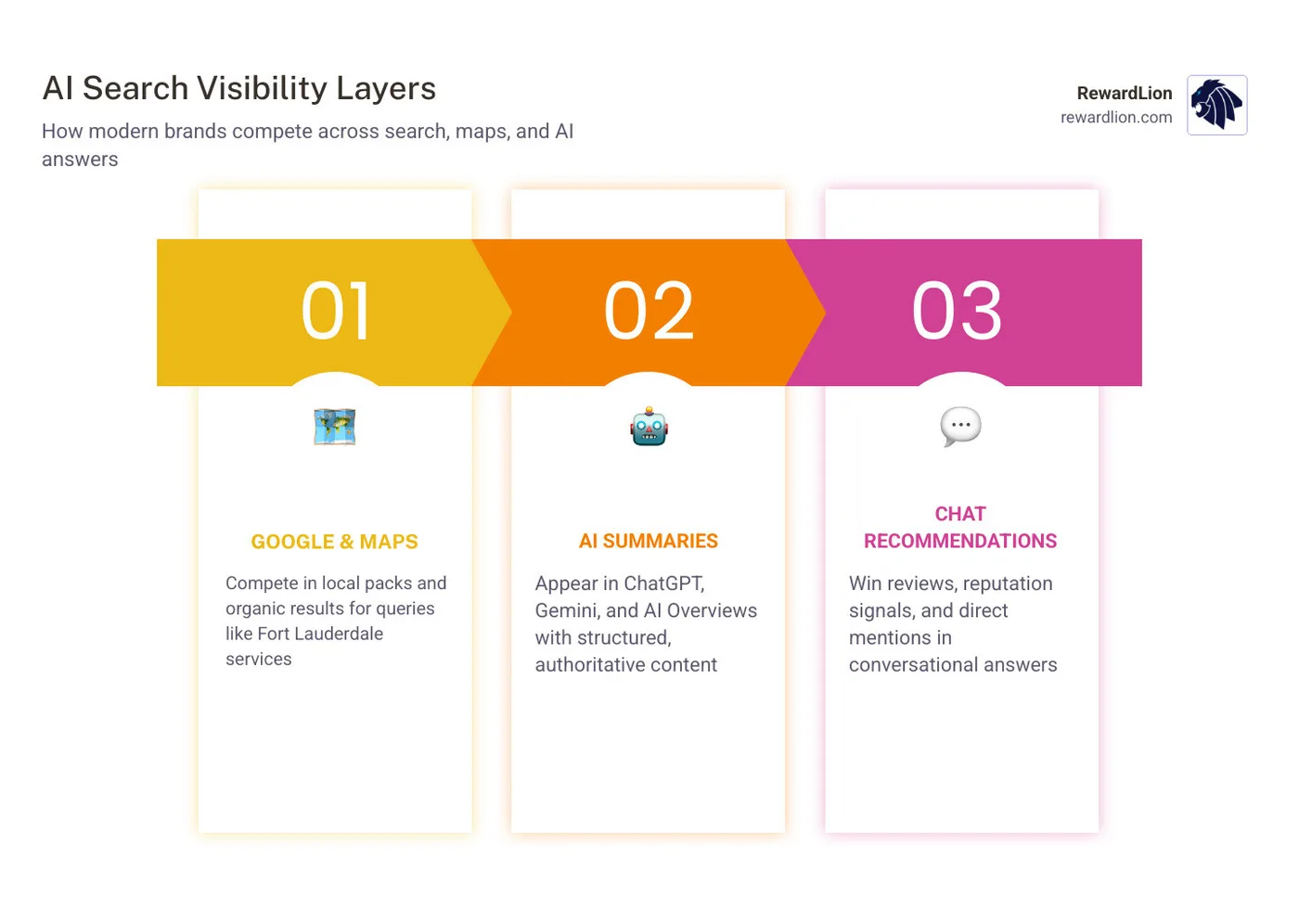
Local and AI search are merging into a new visibility layer.
If someone searches for a service in Fort Lauderdale, Miami, Boca Raton, or anywhere else your business operates, your brand now competes in:
Google results
Maps and local packs
AI-generated summaries
Chat-based recommendations
Review-driven decisions
That makes local SEO, reputation management, and AI search optimization part of the same conversation.
Industry coverage like At Least 65 Different AI Studios Have Launched Globally Since 2022 reflects how quickly the landscape is moving. The winners will not be the studios with the flashiest demo. They will be the ones with the best systems for quality, distribution, and measurable business impact.
Frequently Asked Questions about AI Content Studios
Can AI content studios match a brand’s voice accurately?
Yes, if the studio has a real onboarding and review process.
The best setups include:
Voice samples
Brand rules
Audience positioning
Messaging priorities
Revision feedback loops
Stored context for future work
Without that, output drifts. With it, consistency improves over time.
Will AI-generated content hurt SEO or content quality?
Not by default.
Google's focus is on helpful, original, high-quality content. Poor content is the problem, whether it was made by AI, humans, or a room full of stressed interns.
The safest approach is:
Research-backed drafts
Human review
Strong topical coverage
Clear search intent alignment
Useful structure
Fact checking
Real expertise
Do AI content studios replace agencies or in-house teams?
Usually, no. They augment them.
For many brands, the best use case is a hybrid model where AI content studios help internal teams move faster, cover more channels, and reduce manual production work.
That can mean:
In-house teams focus on approvals and strategy
Sales teams get faster campaign support
Leadership gets better reporting
External expert teams manage execution
Conclusion
AI content studios are no longer a niche experiment. In 2026, they are becoming a practical way for brands to create more content, across more channels, with better speed and lower overhead than older production models.
The key is choosing a system that does more than generate drafts. You want a connected workflow that handles strategy, production, optimization, approvals, publishing, and measurement without losing your brand voice along the way.
That is exactly how we think about growth at RewardLion.
We do not believe businesses should have to juggle multiple agencies, disconnected tools, and fragmented reporting just to stay visible. We build one connected growth system that brings together marketing, sales, automation, analytics, creative production, SEO, AI search visibility, and omnichannel execution.
If you want a hands-off way to turn content into a real growth engine, explore the RewardLion platform.