Why Choosing the Right Analytics Platform for Marketing Changes Everything
An analytics platform for marketing is software that collects, unifies, and analyzes your marketing data across every channel — so you can see what's working, cut what isn't, and grow faster. Here are the top categories of solutions at a glance:
Platform Type Best For Key Benefit Basic Web Analytics Website traffic, small teams Entry-level tracking Behavioral Analytics Product & user behavior Deep journey insights Integrated Marketing Hubs Inbound marketing, SMBs Unified sales & marketing Enterprise Intelligence Cross-channel scale Global data harmony SEO & Accessibility Tools Search & compliance Technical optimization Data Pipeline Solutions Multi-source integration Automated data flow
If you've ever stared at five different dashboards — each telling a slightly different story — you already know the problem.
Most small and mid-sized marketing teams are drowning in data but starving for insight. Campaigns run across search, social, email, and display. The numbers live in separate tools. Nothing connects. And when it's time to report results, someone ends up manually stitching together spreadsheets at midnight.
It doesn't have to work this way.
According to industry data, 30.55% of marketers say data is what helped them identify their most effective strategies. The right platform doesn't just collect numbers — it tells you what to do next.
This guide compares the top marketing analytics categories of 2025, breaks down who each one is built for, and helps you find the right fit for your business — without the hype.
I'm Mike Ibrahim, Founder and CEO of RewardLion and Marketing Director for multiple companies, with over a decade of hands-on experience implementing and evaluating every major analytics platform for marketing across industries. I've seen which tools actually move the needle for growing businesses — and which ones just add noise.
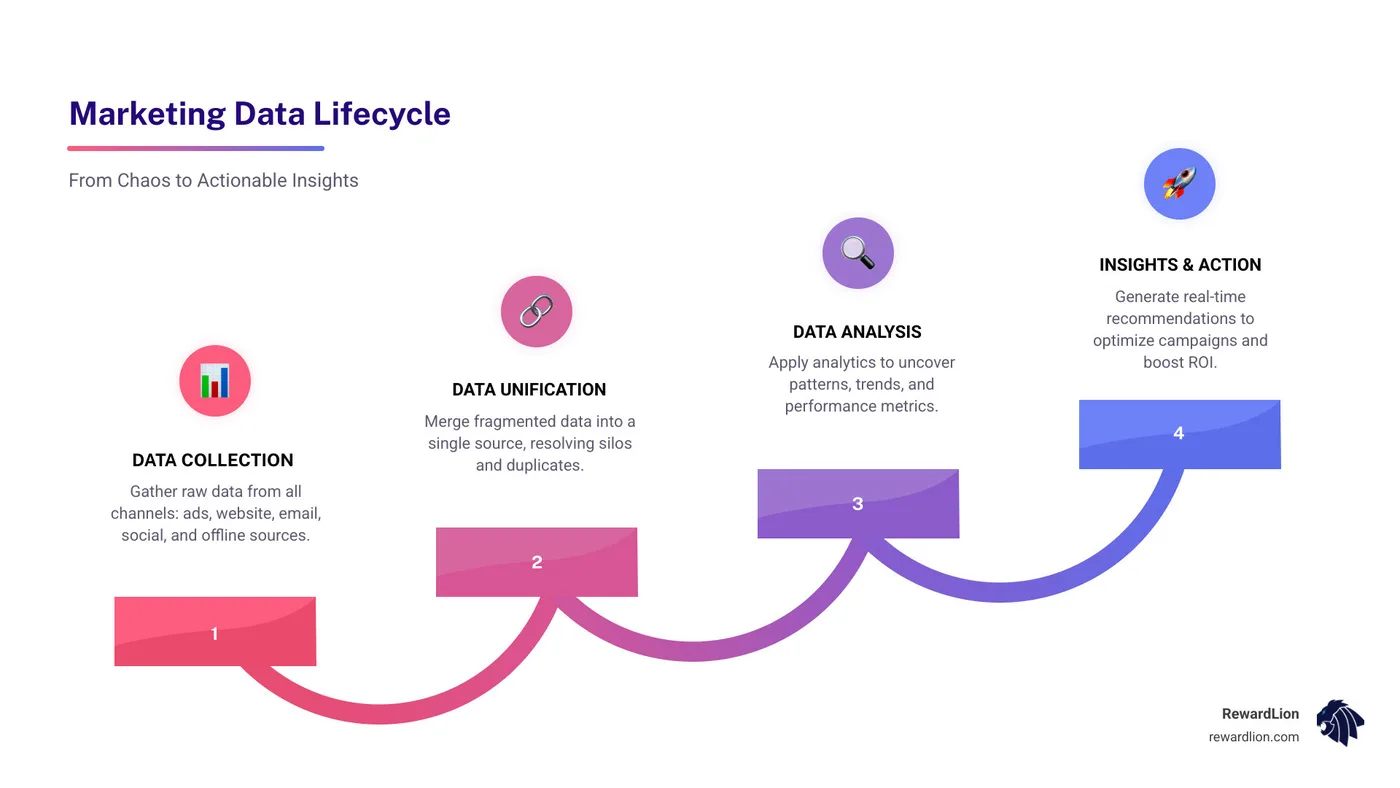
Why You Need a High-Performance Analytics Platform for Marketing
In the early days of digital marketing, "analytics" usually just meant checking how many people visited your website. Today, the landscape is far more complex. We are managing dozens of touchpoints-from Instagram reels and Google Search to offline mailers and CTV ads. Without a centralized analytics platform for marketing, we're essentially flying a plane with a blindfold on.
Solving the Data Chaos Challenge
The biggest hurdle we see businesses face is "Data Chaos." This happens when your Facebook data says one thing, your CRM says another, and your bank account says something else entirely. Research suggests that most marketers lose up to 30% of their ROI simply due to disconnected data and broken attribution.
When data is fragmented, your team spends more time acting as "data janitors"-manually cleaning spreadsheets-than as "data strategists." A high-performance platform unifies these silos, turning manual labor into automated insights. Instead of spending 90 hours a week on reporting, as some large enterprises have experienced, teams can centralize their data to achieve 100% transparency across all regions and channels.
Proving Marketing Impact and ROI
If you can't measure it, you can't improve it. Modern marketing teams are under constant pressure to justify their budgets to stakeholders. An analytics platform for marketing allows us to:
Optimize Spend: Identify underperforming campaigns in real-time and shift budget to winners before the month ends.
Track the Full Journey: Move beyond "last-click" and see how a blog post three months ago contributed to a sale today.
Predict Trends: Use historical performance to forecast future growth, ensuring your strategy is proactive rather than reactive.
If you want a broader framework for measuring channel effectiveness, the American Marketing Association offers widely recognized marketing resources and research. For more information on how to align your data with your growth goals, explore our marketing services.
Essential Features of an Analytics Platform for Marketing
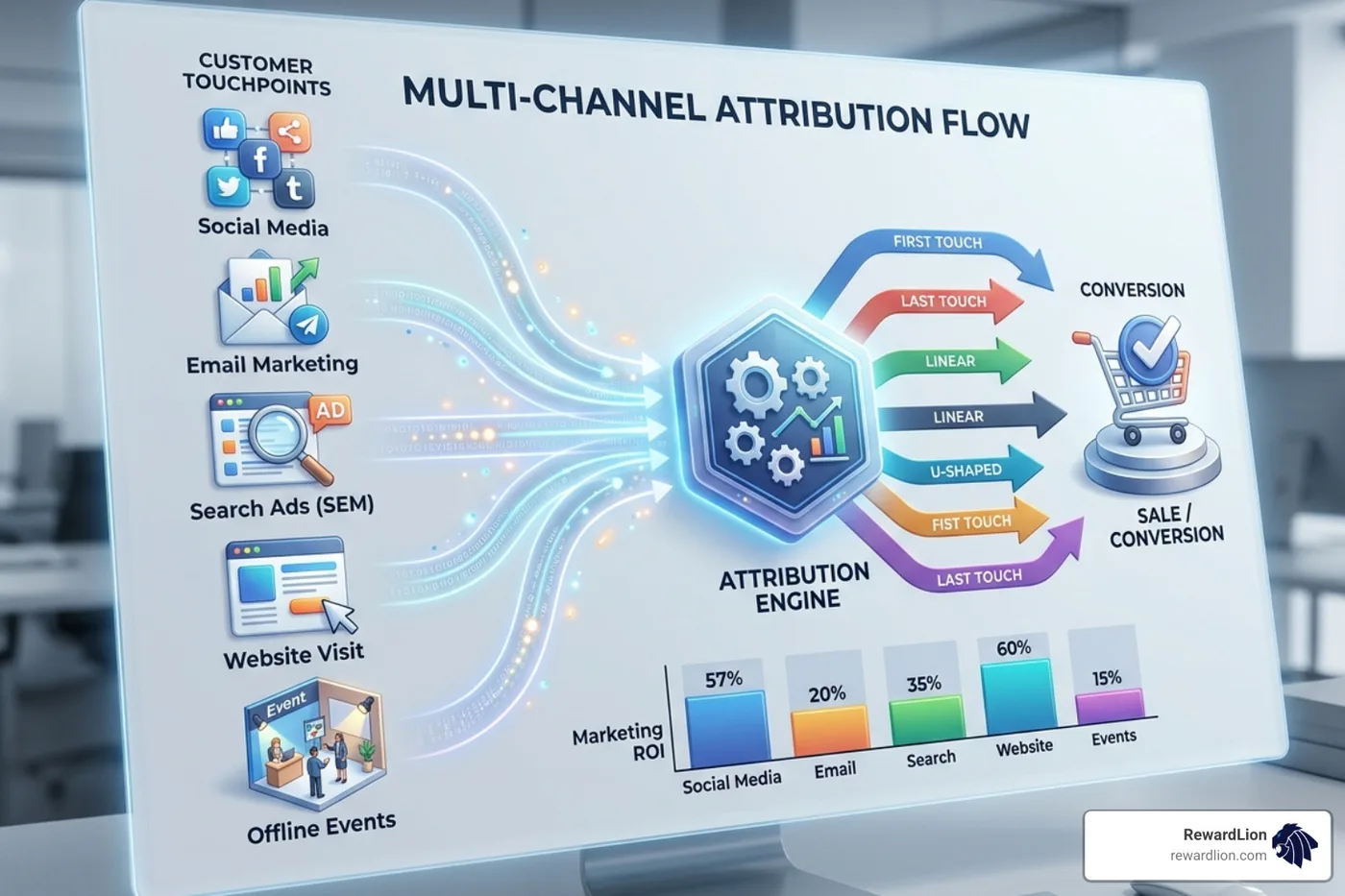
When evaluating a tool, it’s easy to get distracted by shiny dashboards. However, the "engine" under the hood is what matters. Here are the non-negotiables:
Multi-Channel Attribution and ID Resolution
Most standard tools give all the credit to the last place a customer clicked. But we know the journey is rarely that simple. A robust analytics platform for marketing uses ID Resolution to connect the dots.
Whether a user visits from their phone, then their laptop, and finally clicks an email, the platform should recognize them as the same person. This allows for Multi-Touch Attribution (MTA), giving you a clear picture of every interaction.
Attribution Model How it Works Best Use Case First-Touch 100% credit to the first interaction. Brand awareness campaigns. Last-Touch 100% credit to the final click. High-intent, bottom-of-funnel tracking. Linear Equal credit to every touchpoint. Long, complex sales cycles. Data-Driven/AI AI assigns credit based on actual impact. Large-scale, multi-channel ecosystems.
AI-Powered Insights and Predictive Analytics
The future of analytics isn't just reporting what happened; it’s predicting what will happen. Leading platforms now offer AI agents that sense anomalies 24/7.
Predictive LTV: Estimating the long-term value of a customer the moment they sign up.
Anomaly Detection: Getting an instant alert if your ROAS (Return on Ad Spend) dips or if a creative starts showing fatigue.
Behavioral Data: Understanding why users drop off by using session replays and "struggle detection" (identifying rage-clicks or excessive scrolling).
Choosing the Right Tool by Business Size and Use Case
The "best" tool doesn't exist—only the best tool for your specific needs. A local florist in Fort Lauderdale doesn't need the same stack as a global bank.
Solutions for SMBs and Local Growth
For small to medium businesses (SMBs), the focus should be on ease of use and automated reporting. You need to see how your local SEO is performing and where your leads are coming from without needing a PhD in data science.
Integrated Hubs: Great for teams that want an all-in-one inbound engine. These systems help keep everything in one place and provide high-performing email features.
SEO-Focused Analytics: Excellent for businesses that prioritize search visibility and website accessibility alongside their analytics. These tools help organizations achieve high accessibility scores while saving significant time on dashboard setup.
If you're looking for a more hands-off approach, check out our software solutions that integrate directly into your workflow.
Enterprise-Grade Marketing Intelligence
Enterprises deal with massive data volumes and strict security requirements.
Advanced Enterprise Suites: Offering unsampled data and intraday freshness (data available within an hour).
Unified Intelligence Platforms: Built for companies that need to harmonize hundreds of data sources and require strict data governance to manage complex global data pipelines.
The Future of Data: Agentic Analytics and AI Agents
We are entering the era of "Agentic Analytics." This means instead of you asking the software questions, the software acts as an autonomous member of your team.
How AI Agents are Transforming Marketing Teams
AI agents are no longer just chatbots. In an advanced analytics platform for marketing, these agents:
Monitor 24/7: They never sleep. If a campaign hits a snag at 3:00 AM, the agent can pause it or adjust the bid.
Natural Language Queries: You can ask, "Why did our conversions drop in Miami last week?" and get a detailed narrative answer instead of a spreadsheet.
Creative Optimization: They can detect when an ad image is no longer grabbing attention and suggest a replacement.
Winning the AI Search Era
With the rise of ChatGPT, Perplexity, and other AI search engines, traditional SEO is changing. "AI Visibility" is a new metric offered by advanced marketing solutions. It reveals how Large Language Models (LLMs) discuss your brand. To stay ahead, businesses must optimize their content not just for Google, but for the AI agents that are now "reading" the internet to provide answers to users.
For businesses looking to stay ahead of these trends, our custom solutions provide the technical backbone needed for AI integration.
Frequently Asked Questions about Marketing Data
How does an analytics platform for marketing differ from standard web tracking?
Standard web tracking tells you what happens on your site—page views, bounce rates, and sessions. An analytics platform for marketing goes deeper. It connects that website data to your ad spend, your CRM, your email marketing, and even offline sales. It provides a "single source of truth" for the entire customer journey, not just the website visit.
What is the typical ROI of implementing a marketing analytics tool?
The results can be staggering. Users of advanced systems have reported a 217% ROI over three years, with a payback period of just six months. On average, companies using advanced marketing analytics see a 54% revenue growth and up to 30% optimization in marketing spend. By identifying where money is being wasted, the tool often pays for itself within the first year.
Is it better to build or buy a marketing intelligence system?
"Buying" (using a SaaS platform) is almost always better for 99% of businesses. Building an in-house system requires a team of data engineers, constant maintenance, and significant upfront costs. Advanced SaaS platforms allow you to get enterprise-grade insights instantly at a fraction of the time and cost.
Conclusion: Unifying Your Growth with RewardLion
Navigating marketing analytics can feel like trying to solve a puzzle with missing pieces. You can buy the best analytics platform for marketing, but if you don't have the time or expertise to manage it, it becomes just another expensive monthly subscription.
At RewardLion, we do things differently. We provide an AI-powered all-in-one OS platform that unifies your marketing, sales, and analytics into one cohesive system. But we don't just give you the software and wish you luck.
We are a Hybrid SaaS company. This means you get our powerful technology plus a dedicated fractional team (your CAPSS team) to implement, optimize, and manage everything for you. From dominating local SEO in Fort Lauderdale and Miami to running programmatic billboards across the United States, we ensure your data is actually driving growth.
Stop guessing and start growing with a system that connects every part of your business.